
Menthol Explained: Where It Comes From and Why It’s Everywhere
Kasey Fox
Menthol has become one of the most recognizable cooling ingredients in the world. People encounter it constantly in cough drops, toothpaste, vapor rubs, mint candies, cosmetics, and countless wellness products without ever really thinking about what menthol actually is.
That cooling sensation feels so natural that many consumers assume menthol simply comes straight from mint leaves and stops there. In reality, modern menthol production involves both natural farming and advanced chemical manufacturing.
Understanding where menthol comes from helps explain why it has become such an important ingredient across multiple industries.
The Origins of Menthol

The Science Behind Menthol
Menthol is a naturally occurring organic compound known primarily for producing a cold, refreshing sensation.
It works by stimulating cold-sensitive receptors in the body, tricking the nervous system into perceiving cooling even when temperature itself has not changed.
This sensory effect is why menthol is so heavily used in products designed to soothe, refresh, or invigorate.
The compound itself belongs to the terpene alcohol family and carries the chemical formula C₁₀H₂₀O. Among the various forms of menthol, (-)-menthol remains the most desirable because it provides the strongest cooling impact and most recognizable mint aroma.
The Natural Origins of Menthol
Natural menthol comes primarily from mint plants, especially Mentha arvensis.
Often referred to as cornmint, this species contains especially high menthol concentrations, making it ideal for large-scale commercial extraction.
India leads the global menthol industry thanks to massive mint farming operations and favorable agricultural conditions. China also maintains significant production capacity, while countries like Brazil and the United States contribute smaller outputs.
Although peppermint contains menthol as well, its lower concentration makes it less efficient for industrial production compared to cornmint.
Natural vs Synthetic Menthol
Not all menthol sold globally comes directly from plants.
Natural Menthol Production
Natural menthol is extracted directly from mint oils using steam distillation and crystallization processes.
Because it comes from botanical sources, natural menthol is often preferred in products marketed as plant-based, organic, or naturally derived.
Many consumers specifically seek natural menthol because of growing interest in cleaner ingredient sourcing and transparency.
Synthetic Menthol Manufacturing
Synthetic menthol is created through controlled chemical synthesis using ingredients such as citral or m-cresol.
Although synthetic menthol is chemically very similar to naturally extracted menthol, it does not originate from mint plants themselves.
Manufacturers often use synthetic production because it provides stable supply, predictable costs, and reduced dependence on agricultural harvest conditions.
How Menthol Is Made
Producing menthol on a commercial scale requires several carefully controlled processing stages.
Growing and Harvesting Mint
For natural production, menthol begins in mint fields.
Mentha arvensis grows relatively quickly under proper irrigation and climate conditions. Once mature, farmers harvest the leaves and stems for oil extraction.
Timing matters heavily because menthol concentration changes depending on plant maturity and environmental conditions.
Distilling Mint Oil
After harvest, the mint undergoes steam distillation.
Steam extracts volatile oils from the plant material, creating crude mint oil rich in menthol and other aromatic compounds.
The oil is then collected and prepared for refinement.
Forming Menthol Crystals
As the crude oil cools, menthol crystals begin separating naturally from the liquid mixture.
Those crystals are filtered, purified, and graded according to the standards required for pharmaceutical, cosmetic, or food use.
This crystallized form becomes the menthol used in many commercial applications worldwide.
Synthetic Chemical Conversion
Synthetic menthol production follows a different path entirely.
Instead of agriculture, chemical precursor compounds undergo several controlled reactions until menthol molecules are produced artificially.
The final result closely mimics natural menthol chemically, even though the production process differs dramatically.
Why So Many Industries Depend on Menthol
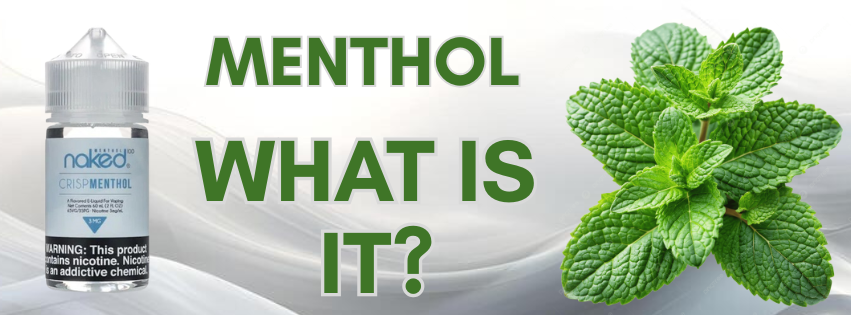
Menthol’s cooling properties make it incredibly versatile. Obviously, our favorite way to utilize menthol is by adding a dash of it into e-liquids to give it a bit of freshness when we take a puff. For example, have you tried Naked 100s Crisp Menthol? That's probably why you're here, to learn more about that.
But there are plenty of ways menthol can be utilized.

Medicinal and Wellness Products
Menthol appears heavily in cold medicines, cough suppressants, muscle rubs, inhalers, and throat lozenges because it creates soothing sensations while helping reduce irritation.
Many people associate the cooling effect itself with relief and comfort.
Personal Care Products
Shampoos, conditioners, shaving creams, lip balms, lotions, and facial treatments frequently use menthol to create refreshing sensations on the skin and scalp.
The ingredient adds a clean, energizing feel many consumers enjoy.
Food and Beverage Products
Mint candies, chewing gum, teas, and flavored beverages depend on menthol for their cool taste and refreshing finish.
Without menthol, many iconic mint flavors would feel incomplete.
Tobacco and Vape Products
As we mentioned above, perhaps the best application of menthol is in our favorite menthol vape juice you can find all over VaporDNA.com! Menthol also became highly popular in cigarettes and vape products because it reduces harshness while adding cooling sensation.
However, regulators worldwide continue debating restrictions surrounding menthol use in nicotine products due to public health concerns.


