
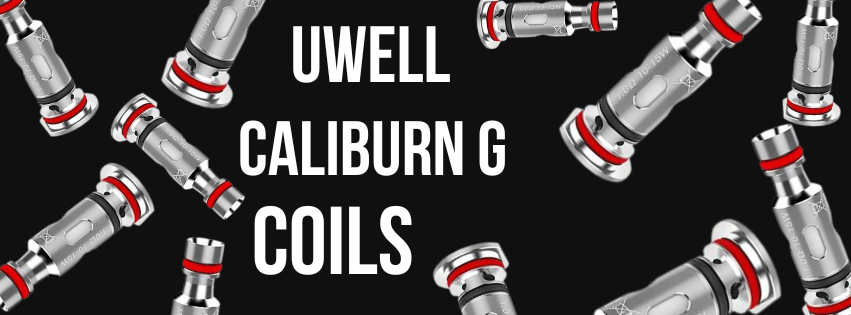
A Simple Guide to Caliburn G Coils and Compatibility
Kasey Fox
One of the most common mistakes people make when buying vape accessories is picking up the wrong coils for their device. With so many Caliburn products on the market now, it’s easy to understand why confusion happens.
Uwell has expanded the Caliburn lineup significantly over the years, and while many devices share compatible coils, there are still important differences between pods, resistances, and vaping styles that users need to understand before ordering replacements.
The good news is that the Caliburn G coil platform is actually one of the most flexible systems available today. Once you understand which devices use the Caliburn G series coils and how each resistance performs, choosing the right setup becomes much easier.
Which Devices Use Caliburn G Coils?
Uwell Caliburn G coils are cross-compatible with a surprisingly large number of devices in the Caliburn family. These include the Caliburn G, Caliburn G2, Caliburn GK2, Caliburn GZ2, Caliburn X, Caliburn Explorer, Caliburn Tenet, Caliburn Tenet Koko, Ironfist L, and the KOKO Prime.
That wide compatibility is one of the biggest reasons the G coil platform remains so popular. Users can upgrade to newer devices without having to completely switch coil systems.
However, there’s one detail many people overlook. Even though the coils themselves may fit multiple devices, the pods still matter. A Caliburn G coil must be paired with the proper pod designed for that specific device. For example, a Caliburn G2 device requires a G2-compatible pod, even though it may still use the same G-series coils internally.
That’s where a lot of purchasing mistakes happen. Someone sees “Caliburn G compatible” and assumes every pod works universally. The coils are compatible, but the pods themselves are not always interchangeable.

Understanding the Different Coil Resistances
The Caliburn G series currently offers three main resistance options, and each one creates a very different vaping experience.
The 0.8-ohm mesh coil is the warmest and most powerful option of the group. It heats quickly, produces more vapor, and offers a looser draw compared to the others. This coil works especially well for restricted direct-to-lung vaping, often called RDTL. Users who want stronger vapor production and a punchier hit usually prefer this option.
The 1.0-ohm coil sits right in the middle. It balances flavor and vapor production nicely without leaning too heavily toward either extreme. For many users, especially those transitioning from smoking, this becomes the safest all-around option because it performs well with both freebase and nicotine salt e-liquids.
Then there’s the 1.2-ohm coil, which is designed primarily for mouth-to-lung vaping. This resistance creates a tighter draw that feels much closer to a cigarette inhale. It also works exceptionally well with higher-strength nicotine salts because it uses lower power and produces a smoother vape.
Choosing the right resistance ultimately comes down to how you prefer to vape. Someone wanting larger clouds and warmer vapor will likely enjoy the 0.8-ohm coil, while users focused on nicotine satisfaction and tighter airflow may prefer the 1.2-ohm option.

Caliburn G vs Caliburn G2
Although both devices share compatible coils, there are still some important differences between the Caliburn G and Caliburn G2.
The original Caliburn G was built around the 0.8-ohm mesh coil and became extremely popular because of its balance between flavor, simplicity, and portability. It delivered a satisfying MTL vape while still producing respectable vapor for such a compact device.
The Caliburn G2 expanded on that formula by offering more flexibility. Out of the box, it typically includes a pre-installed 1.2-ohm mesh coil, but it also supports the 0.8-ohm and 1.0-ohm options. That means users can customize their experience more easily depending on whether they want a tighter MTL draw or a looser restricted direct-lung inhale.
The G2 also introduced airflow adjustment, giving users even more control over how the device feels during use. That flexibility made the G2 especially appealing for people experimenting with different vaping styles.
Battery Life and Charging Differences
Battery performance is another area where the Caliburn G2 improved over the original device.
The Caliburn G comes equipped with a 690mAh battery, which was fairly standard for pod devices of its size. It generally charges fully in around 40 to 45 minutes using USB-C charging.
The Caliburn G2 slightly increases battery capacity to 750mAh while also improving charging speed dramatically. In many cases, the device can recharge in under 30 minutes, which is impressive for such a compact vape.
Both devices use LED battery indicators to communicate remaining battery life. A green light indicates roughly 60% to 100% battery remaining, blue shows around 30% to 60%, and red warns users the battery is below 30%.
The charging indicator also changes behavior once charging is complete, switching from a blinking light to a solid green display.

Choosing the Right Coil for Your Style
At the end of the day, selecting the right Caliburn coil comes down to personal preference and understanding how each resistance behaves.
If you want stronger vapor production and a warmer vape, the 0.8-ohm coil is usually the best fit. If you prefer balance and versatility, the 1.0-ohm option remains a great middle-ground choice. And if you’re focused on cigarette-style airflow or nicotine salt performance, the 1.2-ohm coil is probably the ideal pick.
The biggest takeaway is simple: always double-check both coil compatibility and pod compatibility before ordering replacements. A little extra attention can save a lot of frustration later.
Hopefully this guide makes navigating the Caliburn coil ecosystem much easier and helps you find the right setup for your vaping style.


